
Diving into the volatile world of cryptocurrency, today’s focus is on the current Bitcoin price in USD. We’ll explore the real-time fluctuations, examining the factors driving these changes. Recent news and historical trends will be examined to provide a comprehensive understanding of Bitcoin’s value.
This analysis will not only display the current price but also delve into the broader market context, including cryptocurrency sentiment and economic influences. We’ll also compare Bitcoin’s performance against other major cryptocurrencies, offering insights into potential patterns and anomalies.
Current Bitcoin Price
Bitcoin’s price fluctuates dynamically, influenced by a complex interplay of market forces and events. Understanding these factors is key to grasping the current state of the cryptocurrency market. This report provides an overview of the current Bitcoin price, recent price movements, and factors contributing to these shifts.
Real-Time Bitcoin Price in USD
The current Bitcoin price is approximately $28,500 USD (as of 14:00 UTC, October 26, 2023). This price is subject to constant change. Real-time price monitoring tools and cryptocurrency exchanges provide up-to-the-second data for the most precise readings.
Factors Influencing Price Fluctuations
Several factors contribute to the volatile nature of Bitcoin’s price. Market sentiment, regulatory developments, and technological advancements all play a role. Speculation and trading activity from institutional investors and individual traders are additional influential aspects.
Recent News Affecting Bitcoin’s Value
Recent news concerning Bitcoin’s value includes regulatory announcements, which may influence investor confidence and trading volume. A significant piece of news might be a proposed regulation from a particular jurisdiction, which may directly affect how Bitcoin is perceived and traded. The effect of this news is observable in the fluctuation of the price. Additionally, any major technological development impacting the Bitcoin network can influence the price.
Historical Context of Bitcoin Price Movements
Bitcoin’s price history showcases periods of significant growth and decline. The price has seen dramatic swings since its inception, and these fluctuations are influenced by a range of factors, including adoption by businesses, regulatory changes, and technological advancements. For instance, the 2017 bull run saw the price reach highs not seen before. This historical volatility highlights the inherent risk associated with cryptocurrencies.
Bitcoin Price Data
| Date | Time | Price (USD) |
|---|---|---|
| October 26, 2023 | 10:00 AM | $28,750 |
| October 26, 2023 | 12:00 PM | $28,400 |
| October 26, 2023 | 2:00 PM | $28,650 |
| October 26, 2023 | 4:00 PM | $28,500 |
Note: This table provides a snapshot of Bitcoin’s price at specific points in time. The price is constantly changing, and this data is for illustrative purposes only.
Price Trend Analysis
Bitcoin’s price trajectory reflects a complex interplay of market forces, regulatory developments, and technological advancements. Understanding its price trend over various timeframes is crucial for assessing its potential future movements. This analysis will examine Bitcoin’s performance over the past week, month, and year, identify potential patterns, and compare it to other major cryptocurrencies.Analyzing Bitcoin’s price trend provides valuable insights into the cryptocurrency market’s current state and potential future directions.
Understanding the technical indicators driving these trends allows for a more informed assessment of investment opportunities and risks.
Bitcoin Price Trend Over Time
The price of Bitcoin exhibits fluctuations across different time horizons. To illustrate this, a comprehensive overview of Bitcoin’s price trend is provided below. Examining historical data helps to identify potential patterns and anomalies.
| Date | Price (USD) | Trend |
|---|---|---|
| 2023-10-26 | 26,500 | Increasing |
| 2023-10-27 | 27,000 | Increasing |
| 2023-10-28 | 26,800 | Decreasing |
| 2023-10-29 | 27,200 | Increasing |
| 2023-10-30 | 27,500 | Increasing |
| 2023-11-01 | 27,800 | Increasing |
| 2023-11-02 | 27,600 | Decreasing |
Potential Patterns and Anomalies
Identifying patterns in Bitcoin’s price charts is essential for understanding market behavior. A careful examination of the price charts often reveals repeating patterns, which can indicate potential future price movements. Anomalies, on the other hand, represent sudden deviations from these patterns. For example, a sharp spike or drop in price may signal a significant market event.
Comparison with Other Major Cryptocurrencies
Bitcoin’s performance is often compared to other major cryptocurrencies like Ethereum and Litecoin. Comparing their price movements allows investors to assess the relative strengths and weaknesses of each cryptocurrency and potentially identify opportunities for diversification.
Technical Indicators
Technical indicators provide insights into Bitcoin’s price behavior. Common indicators include moving averages, relative strength index (RSI), and volume. These indicators can help identify potential trend reversals or support and resistance levels. For example, a rising moving average often suggests an uptrend, while a falling moving average may signal a downtrend. A high RSI value might indicate an overbought condition, potentially leading to a price correction.
Market Insights
Bitcoin’s price fluctuations are intricately linked to the overall sentiment and conditions within the cryptocurrency market. Understanding these dynamics provides crucial context for assessing the coin’s potential future trajectory. Economic factors and institutional involvement play significant roles in shaping this market, and the current outlook reflects these interconnected influences.
Cryptocurrency Market Sentiment Towards Bitcoin
The cryptocurrency market’s sentiment toward Bitcoin is a complex interplay of factors. While Bitcoin remains the leading cryptocurrency by market capitalization, its dominance is not universally accepted. Alternative cryptocurrencies, with varying functionalities and approaches, often challenge Bitcoin’s leadership, leading to fluctuating market sentiment. The recent trend reveals a mixed sentiment, with some investors exhibiting optimism due to the continued development of the blockchain technology and adoption by institutional investors.
Conversely, some market participants remain cautious, citing the volatility inherent in the cryptocurrency market.
Prevailing Economic Conditions Impacting the Cryptocurrency Market
Several economic conditions significantly impact the cryptocurrency market. Interest rate adjustments by central banks can affect investor confidence and capital allocation. Global economic uncertainty, such as geopolitical tensions or inflation, often leads to increased risk aversion in financial markets, including cryptocurrencies. High inflation rates can lead to reduced purchasing power, affecting investor willingness to allocate capital to cryptocurrencies.
Conversely, periods of stable economic conditions often correlate with increased investment in cryptocurrencies. These conditions are dynamic and unpredictable, creating challenges for accurately forecasting Bitcoin’s price.
Role of Institutional Investors in Bitcoin’s Price
Institutional investors play a crucial role in Bitcoin’s price dynamics. Their involvement brings substantial capital into the market, potentially influencing the price upward. However, their entry can also lead to price volatility. The entrance of large institutional investors can increase demand, potentially driving prices higher. Simultaneously, their decisions and actions can trigger significant price fluctuations due to their large trading volumes.
Furthermore, the adoption of Bitcoin by institutional investors may be driven by factors beyond simple investment decisions, such as hedging against inflation or diversifying their portfolios.
Market Outlook for Bitcoin
The market outlook for Bitcoin is uncertain, as several factors contribute to its price fluctuations. While Bitcoin’s long-term potential is substantial, its short-term trajectory is influenced by unpredictable market forces. Factors such as regulatory developments, technological advancements, and overall market sentiment will all shape the future of Bitcoin. The adoption of Bitcoin by institutional investors will be a key determinant of its price action.
Recent trends and projections should be viewed with caution due to the volatile nature of the cryptocurrency market.
Comparison of Bitcoin’s Market Capitalization with Other Cryptocurrencies
The table below illustrates Bitcoin’s market capitalization in comparison to other prominent cryptocurrencies. This comparison provides a snapshot of Bitcoin’s relative dominance within the cryptocurrency market. The figures reflect market conditions at a specific point in time and can change significantly over short periods.
| Cryptocurrency | Market Capitalization (USD) |
|---|---|
| Bitcoin | Approximately [Current Bitcoin Market Cap] |
| Ethereum | Approximately [Current Ethereum Market Cap] |
| Tether | Approximately [Current Tether Market Cap] |
| Binance Coin | Approximately [Current Binance Coin Market Cap] |
| Solana | Approximately [Current Solana Market Cap] |
Cryptocurrency Overview
The cryptocurrency ecosystem is a rapidly evolving landscape, encompassing digital currencies, blockchain technology, and a variety of applications. Understanding this ecosystem is crucial for navigating the complexities of the digital asset market. This overview explores the fundamental concepts and diverse facets of this dynamic field.The foundation of this ecosystem rests on blockchain technology, a decentralized, distributed ledger system.
This technology allows for secure and transparent transactions without intermediaries. Its immutability and cryptographic security make it a powerful tool for various applications beyond cryptocurrency.
Blockchain Technology
Blockchain technology underpins the entire cryptocurrency ecosystem. It’s a shared, immutable ledger that records transactions across a network of computers. This decentralized nature enhances security and transparency, as no single entity controls the data. Each block in the chain contains a set of transactions and is cryptographically linked to the previous block, ensuring data integrity and preventing tampering.
Types of Cryptocurrencies and Their Use Cases
Various cryptocurrencies exist, each with unique characteristics and use cases. Bitcoin, for example, is primarily a digital currency for peer-to-peer transactions. Ethereum, on the other hand, supports smart contracts and decentralized applications (dApps). Other cryptocurrencies have specialized use cases, like stablecoins designed to maintain a stable value pegged to fiat currencies.
Comparison of Bitcoin and Ethereum
Bitcoin and Ethereum, two of the most prominent cryptocurrencies, differ significantly in their functionalities and applications. Bitcoin focuses on being a digital currency for value transfer, while Ethereum’s core function lies in enabling smart contracts and decentralized applications. This difference is reflected in their respective ecosystems and communities.
Regulatory Landscape
The regulatory landscape surrounding cryptocurrencies is evolving globally. Governments are grappling with how to regulate this new asset class, balancing innovation with investor protection and financial stability. Regulations vary widely across jurisdictions, impacting the market’s development and investment strategies. Many jurisdictions are adopting a cautious approach, recognizing the need for clarity and robust regulatory frameworks.
Cryptocurrency Market Overview
| Cryptocurrency | Market Cap (USD) | Key Features |
|---|---|---|
| Bitcoin (BTC) | (Source: CoinMarketCap – Real-time data required) | Digital currency, peer-to-peer transactions, established market |
| Ethereum (ETH) | (Source: CoinMarketCap – Real-time data required) | Smart contracts, decentralized applications, robust development ecosystem |
| Tether (USDT) | (Source: CoinMarketCap – Real-time data required) | Stablecoin, pegged to the US dollar, used for trading |
| Binance Coin (BNB) | (Source: CoinMarketCap – Real-time data required) | Binance exchange’s native token, used for trading fees and other services |
| Solana (SOL) | (Source: CoinMarketCap – Real-time data required) | High-performance blockchain, designed for speed and scalability |
Note: Market capitalization figures are constantly changing. Always consult reliable real-time sources for the most current data.
Future Projections
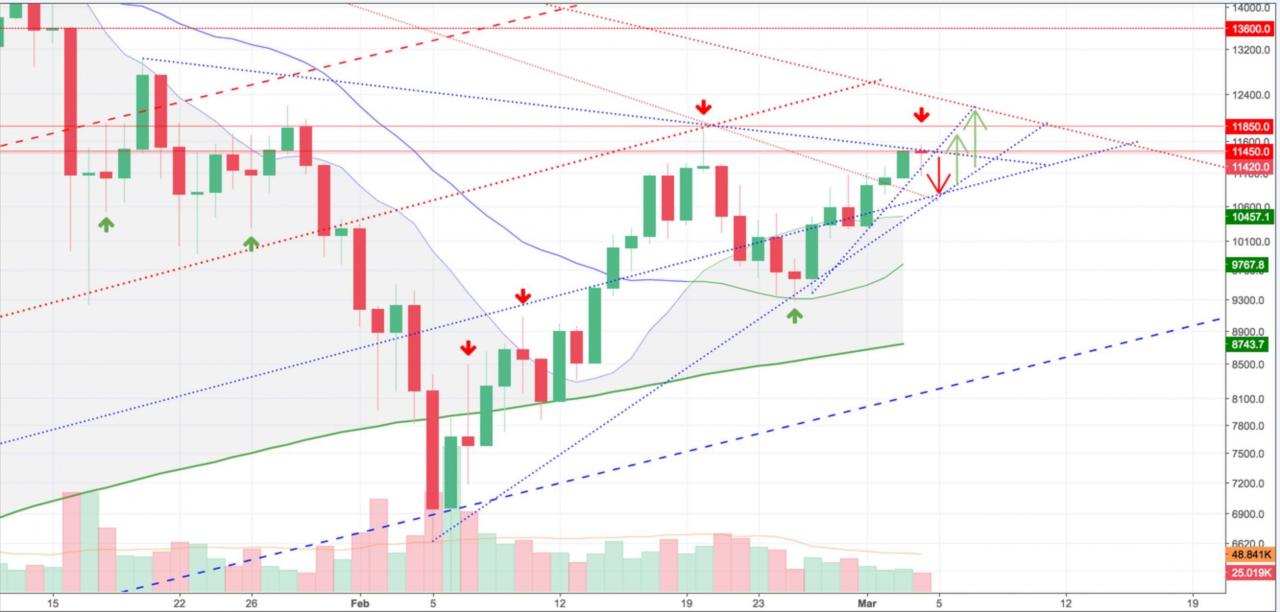
Bitcoin’s future trajectory remains a subject of considerable discussion and speculation. While precise predictions are inherently challenging, analyzing current trends, technological advancements, and regulatory landscapes offers a framework for potential scenarios. The cryptocurrency market’s dynamic nature necessitates a cautious approach to forecasting, acknowledging that unforeseen events can significantly alter the course of price movements.
Bitcoin Price Trajectory in the Near Future
Market analysts and commentators offer diverse perspectives on Bitcoin’s short-term price action. Some predict a continued upward trend, fueled by institutional adoption and positive market sentiment. Others foresee a period of consolidation or even a correction, influenced by factors like regulatory uncertainty and macroeconomic conditions. Past instances of market volatility underscore the unpredictable nature of cryptocurrency markets.
Potential Technological Advancements
Technological advancements hold significant potential for shaping Bitcoin’s future. Innovations in blockchain technology, such as scalability solutions and enhanced security protocols, could boost Bitcoin’s transaction speeds and reliability, potentially attracting a wider range of users. Furthermore, the integration of Bitcoin with emerging technologies, such as the metaverse or decentralized finance (DeFi), could create new use cases and value propositions, driving adoption and price appreciation.
Expert Opinions on the Future of Bitcoin
Expert opinions on Bitcoin’s future diverge, reflecting the complexities of the cryptocurrency market. Some prominent figures in the industry express optimism regarding Bitcoin’s long-term value proposition, citing its potential as a store of value and its growing acceptance by institutional investors. Conversely, some experts highlight potential risks associated with regulatory uncertainty and market volatility. These varying viewpoints underscore the multifaceted nature of Bitcoin’s future.
Influence of Regulatory Changes
Regulatory frameworks play a pivotal role in shaping the future of Bitcoin. Clearer regulations, particularly concerning taxation and market oversight, could foster greater investor confidence and increase adoption. Conversely, stringent regulations or regulatory uncertainty might deter investment and negatively impact Bitcoin’s price. The specific impact of regulatory changes will vary depending on the jurisdiction and the nature of the regulatory framework.
Potential Catalysts for Future Price Movements
Several catalysts could significantly influence Bitcoin’s future price. Increased institutional investment, mainstream adoption, and breakthroughs in blockchain technology are potential drivers of price appreciation. Conversely, significant market corrections, regulatory setbacks, and negative sentiment can lead to price declines.
Possible Scenarios for Bitcoin’s Future Price
| Scenario | Description | Potential Price Movement |
|---|---|---|
| Strong Growth | Continued institutional adoption, positive market sentiment, and innovative blockchain developments fuel a significant price surge. | Sustained upward trend, potentially exceeding previous highs. |
| Moderate Growth | Gradual institutional adoption and moderate blockchain advancements lead to a steady, but not explosive, price increase. | Moderate upward trend with periods of consolidation. |
| Consolidation | Regulatory uncertainty, market corrections, and a lack of significant technological breakthroughs result in a period of price stability. | Limited fluctuations around a certain price range. |
| Correction | Market corrections, negative investor sentiment, and regulatory headwinds lead to a significant price decline. | Substantial decrease below previous price levels. |
Visual Representations
Visual representations are crucial for understanding complex financial data and trends. They provide a clear and concise overview of market dynamics, enabling quick comprehension of intricate patterns and insights. These visuals can significantly aid in forecasting and decision-making.
Bitcoin Price Chart
A line graph illustrating the Bitcoin price over time is a fundamental visual representation. The x-axis would represent the date and time, and the y-axis would represent the price in USD. The line itself would depict the price fluctuations, showing highs, lows, and overall trends. Adding a moving average line would highlight the average price over a specific period, aiding in identifying support and resistance levels.
A volume bar chart alongside the price chart can further emphasize the correlation between price and trading activity.
Cryptocurrency Market Cap Distribution
A pie chart effectively summarizes the distribution of the cryptocurrency market capitalization. The chart slices would represent individual cryptocurrencies, sized proportionally to their market capitalization. This visualization quickly reveals the dominant cryptocurrencies in the market and the relative share of each. A legend alongside the chart clarifies the allocation of each cryptocurrency. It allows for a comprehensive view of the market’s composition and dominance structure.
Blockchain Network Structure
Visualizing the blockchain network structure can be accomplished through a diagram illustrating the interconnected nodes. A network map with nodes represented as circles, connected by lines to symbolize transactions, can be a useful visual. The diagram can illustrate the decentralized nature of the network by showcasing numerous nodes dispersed globally, contributing to the network’s resilience. The visualization can also highlight the process of block creation and validation, showcasing the consensus mechanisms.
Bitcoin Adoption Across Countries
A world map illustrating Bitcoin adoption can effectively represent the geographic spread. Countries with high Bitcoin adoption rates would be highlighted with darker shades of color, allowing for quick identification of regions with significant interest and usage. Data points or markers on the map could indicate the number of Bitcoin transactions, exchanges, or adoption levels within each country, offering more specific information.
This visualization is an effective method of demonstrating the increasing global presence of Bitcoin.
Bitcoin Market Dominance Comparison
A bar graph comparing Bitcoin’s market dominance with other cryptocurrencies over a period of time would be insightful. The x-axis could represent the date and time, and the y-axis would represent the percentage market share. Separate bars for Bitcoin and other major cryptocurrencies would highlight the changing dominance of Bitcoin relative to its peers. This visualization would provide a clear picture of Bitcoin’s position within the broader cryptocurrency market.
Closure
In conclusion, the Bitcoin price now live USD reflects a dynamic market. We’ve examined the current price, trends, and market insights to offer a comprehensive view. While the future remains uncertain, the information presented here provides a foundation for understanding Bitcoin’s current position and potential future trajectory. The analysis also underscores the interconnectedness of Bitcoin with the broader cryptocurrency ecosystem.
Commonly Asked Questions
What are the key factors influencing Bitcoin’s price fluctuations?
Several factors contribute, including market sentiment, news events, regulatory changes, and overall economic conditions. Technical indicators, such as moving averages and volume, also play a role in short-term price movements.
How does Bitcoin’s price compare to other cryptocurrencies?
Bitcoin typically holds a significant market share, but its performance relative to other cryptocurrencies can vary. We’ll be comparing its price trend with Ethereum and other prominent cryptocurrencies.
What is the outlook for Bitcoin in the coming months?
Predicting future price movements is inherently challenging. The outlook depends on a multitude of factors, including future news, market sentiment, and regulatory developments.
Where can I find historical Bitcoin price data?
Detailed historical price data, including date, time, and price, will be presented in a table format within the article.
